Posts tagged ‘anarchist’

Code Enforcement- the Slappin’ Hand of Gentrification

Code Enforcement- the Slappin’ Hand of Gentrification

“This used to be the United States,” Soffee said. “It wasn’t against the law to be poor.” – RTD 6/29/14 pg A6

Over several months I have heard from a friend who lives in a local trailer park, and a friend who’s relative manages said trailer park, about the plight they are going through dealing with the City of Richmond’s Code Enforcement Officers. The strong armed campaign to force compliance with building codes to Rudd’s Trailer Park on Southside made the front page of the Richmond Times Dispatch today, opening the issue up to larger dialogue. If you have not yet read the article in the Sunday June 29, 2014 paper please take a few minutes to check it out.

The long and the short of it is, Code Enforcement has decided to focus on the 9 trailer parks remaining in the City of Richmond. To understand the whole reason behind what they are doing, and why what they are doing is problematic, we need to first understand some basic ideas about code enforcement. We also need to understand the context of targeting people who are low income, who may not have English as their first language, and who’s culture is different than the WASP mentality from which much of our local government stems. Additionally, we are – I repeat again and again – talking about a City with a 27% poverty rate, and where 40% of our youth live in poverty. Everything is about context.

Code Enforcement is not a neutral tool, and it is not an inevitable force. In fact, the way in which the City of Richmond (and many other places) uses code enforcement, especially via the CAPS program, reeks of selective enforcement. Selective enforcement being where laws are used at the whim of officials and not uniformly applied to everyone in a fair manner. One example of selective enforcement by CAPS was when several years ago they issued me a citation for my rotten soffets. I acknowledged my rotten soffets, and explained my plan to eventually get a loan to do roof and soffet repairs. But I asked the guy if he was issuing everyone in the neighborhood a citation – almost all of the homes feature rotten soffets. He said he was not, I accused him of selective enforcement, and he dropped the citation. Selective Enforcement is one of the major problems with how CAPS functions generally, and how this new attack on trailer parks specifically just stinks.

CAPS stands for Community Assisted Public Safety, and is a combination of Code Enforcement officers, Cops, and community members who snitch on their neighbors. Officially this involves five departments – Planning and Developement Review, Police, Fire, Finance, and the Virginia Department of Health. What it means on the ground is that they have meetings, like the MPACT ones, where citizens are able to make complaints. Then a code enforcement officer, often escorted by a cop (at least when they come to my house), shows up at the property to look at whatever the complaint was about, and to try to develop a laundry list of other violations.

If you haven’t read up on CAPS I suggest you take a look yourself, to see some of what is behind their attempts at “compliance”.
First off, the word compliance just leaves me with an icky feeling. Ugh -authoritarian much? Secondly, the way that CAPS functions gives NIMBY (not in my backyard) types, gentrifiers, and developers a platform through which they can try to impose their value systems on their neighbors. CAPS facilitates the prioritization of money over community, and the perpetuation of petty grudges and disagreements which then become backed by the power of the state. Concrete example of value systems conflicting- once a Code Enforcement officer came to my house, and I suspect knowing I wasn’t home, spray painted over the word “fuck” which was painted on my back fence which we use as a public graffiti wall. When I called him, irate, he explained he assumed it was not supposed to be there. I had to emphasize that, yes, I really did intend for the word Fuck to be on my fence and I did not appreciate his vandalism of my property.

At the Wingnut Anarchist Collective we have probably had CAPS called on us at least 6 times over the past 5 years. Primarily it seems to be the result of the police or yuppie neighbors who are mad about something we are doing (like our giant anti-cop mural), which happens to be legal, but so get code enforcement to come around to seek out anything that doesn’t meet code they can possibly spot. Generally code enforcement officers and cops are greeted by video cameras and curse words, cause we don’t want to encourage their return. We are privileged enough and have been educated on our rights and the local laws and codes enough that often we have been able to successfully argue back against bogus citations. Not everyone is in a position to do so.

You might also be tempted to think that every violation that Code Enforcement cites someone for is valid, but oh my you would be incorrect. I’ve had citations for ordinances which didn’t actually define any of the relevant terms, and for ordinances that the code enforcement officer didn’t actually seem to know what they meant.  I’ve known people who received violations for things like peeling paint, having recently repainted their property, only to eventually discover that the code enforcement officer found one house on the block with peeling paint, and simply went ahead and issued everyone on the block the same citation. Another friend was working through the code enforcement process recently over a non-functioning car, only to end up having code enforcement come and tow the car days after he brought the vehicle into compliance with tags etc. When you hear that code enforcement issued however many citations, take it with a handful of salt, and a critical eye. And hope that the folks who have the citations against them have the ability to push back against the irrational bureaucracy, read between the lines, and know enough to never trust a government official.

Assumingly the motivation behind CAPS comes from this tired old Broken Window Theory that law enforcement have been flapping their gums about since the late 70’s and early 80’s. Theory goes, that vandalism and ‘disorder’ in an urban environment spawn or contribute to further criminal activity. Primarily this theory has resulted in police working towards covering graffiti, enforcing building codes, and other petty visual issues in communities.

The broken window theory has also notably been the motivator behind such other authoritarian approaches like NYPD’s notorious stop and frisk program. Having witnessed the RPD engaging in similar stop and frisk harassment of primarily young men of color, it seems as though RPD has bought into broken window theory hook, line, and sinker.

One of the major problems I have with the broken window theory isn’t even that it is necessarily incorrect. Perhaps it is correct, and fixing up the physical environment somewhere convinces criminals to leave that area. But there’s the major problem I do have- also known as the bubble effect. Criminals maybe leave one area, but by failing to address the root cause of criminal behavior, you are simply perpetually moving the criminal activity around but never actually solving it. Crime isn’t solved because someone get’s their windows repaired (which I will repair for money by the way, holler), crime is ‘solved’ because there are jobs with dignity available, counseling, recovery programs, a well adjusted society, educational opportunities, access to healthy food, transportation, etc. The same thing goes for poverty or homelessness. Every single effort to move the poor around (cough privatizing Monroe Park cough), including the economics of gentrification and property taxes, does not end poverty. Mayor Jones might be content to do his best to relocate poor people outside of the Richmond City boundaries, but those efforts will not produce a successful and happy society nor an end to poverty or crime. We have to think regionally, and we have to work towards a more just society. Not one where we have forced the poor into the suburbs because of the reverse white flight tendencies of liberals.

Gentrification is the process through which low income people are forced out of one area due to increases in property tax and rent. In 2006, according to the RTD, Rudd’s Trailer Park was assessed at $908,000 – now in 2014 it is assessed at almost $2.5 million. That means an increase in property taxes annually – going from $10,896 in 2006 to $30,000 now (1.2% property tax rate). While the trailer park is different than single family homes the pricnciple is still the same. The landlord has to pay higher taxes, and no doubt that cost is reflected in increased rental rates for all tenants. Leaving tenants with less extra cash to take care of things like maintenance and repairs.

I propose that the City of Richmond work to slow down gentrification through several related policy changes. We should put a moratorium on zoning changes, a moratorium on increases in property assessments for single family dwellings, and start demanding through a combination of legal and PR means that any “non-profit” organization which pays any employee over $150,000 a year including bonuses, benefits, and petty cash have to start paying property tax on all of their holdings within City limits. This makes sense to me, given the million dollar paycheck VCU pays it’s basketball coach and the over $200,000 Venture Richmond’s head Jack Berry hauls in – just as 2 examples of what “non-profits” are doing with their money instead of pitching in to the property tax fund to benefit our local schools and other public resources.

City Building Inspector Mark Bridgman was quoted in Sunday’s paper stating that any people kicked out of their house through a condemnation would be given the information of the Department of Social Services offices on Southside. As if that guaranteed housing, as if that solved their problems, or was any kind of balm to the wound of displacement. As if that was sufficient in any way, or in any way guaranteed that these folks would not end up living in another below building code dwelling. Come the fuck on. Once the City’s Code Enforcement officers stick that orange Condemned sticker on a property, it is illegal for anyone, including the owner, to be staying there. The orange stickers then give cops the go ahead to patrol the buildings to make sure that no one take shelter in the dwelling.

Where we live is about a lot more than the building we live in. People live in communities, and it is through those communities that relationships and support structures are fostered and nurtured. Getting the address for DSS is a joke. The value of community is why organizations such as RePHRAME exist to try to protect residents of Public Housing from displacement as well. If we value the well being of people, then we have to value their relationships as well. You are not looking out for someone’s well being if all you do is insist they live in a house of particular building code standards. We need to be broader minded than that. Safety, sustainability, and community need to go together.

I am not arguing that anyone should live in unsafe structures. I am not for unhealthy conditions. But code enforcement, the way Richmond is implementing it, does not ultimately stop that from happening. It is a strong armed approach, which results in dislocation of primarily low income people, the trauma of the disruption of community and support networks, and gentrification.

Targeting some of the most impoverished neighborhoods is just code enforcement going for the low hanging fruit. Yes, folks need the larger society’s help. No, that does not look a damn thing like code enforcement coming in to intimidate and strike fear into people’s hearts. Soffee, the manager of Rudd’s trailer park gets it right when he said that “instead of ‘putting people out,’ the city should be focusing on how it can help them fix the mobile homes” (RTD 6/29/14 A6).

When folks can not afford to bring their homes up to code, we should help them. Whether that be via non-profits, government grants, or just community efforts. We should also take a holistic approach. Why perhaps have folks ended up where they are? We can work as a City to make sure we have public side walks, affordable and effective public transportation, healthy affordable food, educational classes etc. available in those areas. Folks who can’t get to decent jobs, or stay healthy enough to work consistently, aren’t going to have an easy time affording home repairs.

Unfortunately, this recent push to enforce the cleanup of local trailer parks is par for the course of bad policy by the City of Richmond. Instead of looking to the roots of the problem, instead of offering positive and productive community oriented solutions, the government does everything it can to criminalize and invisibilize poverty.
These efforts to make poverty go away won’t be successful, but they will cause a lot of pain and suffering, and cost the tax payers a lot of money in the mean time. Capitalism and the State do not hold the answers to our problems, and we need to seek community oriented solutions to local issues. While at the same time we hold the state back, and stand up against unjust enforcement and unjust laws.

If you want to “like” Rudd’s Trailer Park and start or join in on a conversation about how we can help folks in Richmond’s trailer parks you can check them out online – Rudd’s Trailer Park.

Reporting on Richmond’s Reporters

Getting interviewed by journalists and reporters gives me an insider perspective on certain aspects of the media in Richmond.
Lately, I’ve noticed a common issue with the people who are interviewing me; they are new to town. From VCU’s Commonwealth Times paper to ABC 8’s tv reporters, I’ve spoken with reporters who were practically brand new to Richmond, and reporting on issues for which they had no background. I’m pretty sure that some of my interviews have turned into lectures, with me trying to fill in for instance, the past 4 years of struggle around Monroe Park to someone who did not realize the 2010-11 campaign against the renovation plans existed. I’ve given reporters names, websites, and more to look into. But with the high speed of today’s media and short attention spans of many audiences, it is unrealistic to expect anyone to be able to cram much research in before ‘Tonight at 11″.

To be clear, this is not likely the fault of the journalists. In fact, it is more symptomatic of the sad state of journalism and the media in the United States of America today. Journalists today are notoriously underpaid, overworked, and it seems have fairly unstable career paths compared to their predecessors. One of the results of this, is that it seems journalists move around more than they once did.

I tried to ask a wide swath of Richmond’s journalists and reporters about their home town, experience in journalism, and time spent in Richmond. I wanted to confirm my suspicions that many of the journalists who had interviewed me, and produced articles on current political issues in Richmond, lacked adequate knowledge and understanding of the history around those issues.

There are of course, the old heads (sorry for calling you old yall – but really, you are), who have been around Richmond for a while, like Chris Dovi, Michael Paul Williams, Mark Holmberg, Jason Roop and more. I don’t want to age them too much, so no need to flaunt their time spent in Richmond here. Let’s just say they are well versed in the going-ons in Richmond.

But then there is a large crew of people who have only been in Richmond since 2012 or as short as 6 months. These journalists include some names you see all over the media-

Ned Oliver (Style Weekly and in Richmond since September 2012),

Graham Moomaw (Richmond Times Dispatch and in Richmond since January of 2013),

Tom Nash (Style Weekly and in Richmond for 6 months),

Tina Griego (Style Weekly and in Richmond since August 2012), (more…)

On Being a Scary Man-Lady with a Fat Ass

Check out my reaction to anonymous internet commenters on news stories in my new essay on Quail Bell Magazine

http://www.quailbellmagazine.com/3/post/2014/04/essay-on-being-a-scary-man-lady-with-a-fat-ass.html

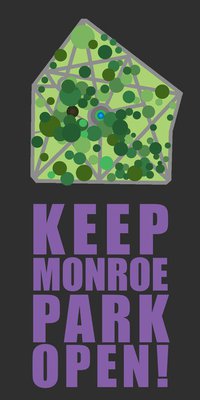
Keep Monroe Park Open and Free Power Point

This is the first power point I have put together in probably a decade.
I made it because I wanted to make a presentation to the Land Use Committee on my bid for Monroe Park. However, they are not giving me equal treatment to Alice Massie/ the Monroe Park Conservancy.
It looks like I will not be able to present to them.
But I hope others will find this a useful tool, tying together some pieces around Richmond that are connected and that can teach us lessons on what not to do with Monroe Park.
If you would like me to come to your school, organization, neighborhood group or religious group to present the powerpoint I would be more than happy to. It is much more comprehensive with narration. And I would welcome a question/answer period at the end as well.
Please be in touch at mokarnage @gmail.com

Check out my Etsy Shop- new products coming this month and next!

The 80’s Called and They Want Their Throw Pillow Back

throwpillow80s

New throw pillow on my Etsy Shop.
New items will be added throughout April and May as I try to fundraise the money I need to take a trip to Indiana and New Hampshire this summer.
I have a short bus I bought but I am trying to pay it off, and get enough money to fix it and pass inspection and add a solar panel and battery bank to it before June. Not to mention the dang ol diesel I will need to make the trip.
So if you need tinctures, throw pillows, books, or weird jewelry please buy some! And check back for more interesting items and one of a kind art.

Interview on WRIR’s Open Source

I was interviewed on March 27th on WRIR’s Open Source Program.
If you missed the airing on Friday, you can go online for the next week or so and listen to the show on their Tunein player.
http://wrir.org/tunein/
I will try to post the permanent link once that becomes available.
The interview is about Monroe Park and the bid I submitted on the park Lease, essentially in protest of the concept of privatizing our public parks.
Background articles on the issue at http://www.wingnutrva.org

Don’t Wanna Pay $35 to use a Public Park? Stop the Privatization of Monroe Park

Check out my new article about the proposed privatization of Monroe Park being pushed by Richmond’ elites!
Don’t Privatize Monroe Park

keepmonroeparkopen

Eating Vegan On The Cheap in Richmond

This was originally something I published as a zine. I just wanted to get the information out there more since I’ve almost run out of copies!

Eat Vegan

on the Cheap

in Richmond

Many folks I have talked to about veganism share a similar complaint/concern. They are worried about it being affordable.

And let’s be real- there are many ways that veganism is presented in a classist way.

Some examples:

I have a bunch of vegan cookbooks that call for ingredients that are just totally obscure. I’ve been vegan for 10 years and I’ve never used them. These sorts of cookbooks/recipes can make veganism seem really intimidating and inaccessible to folks.

Another reason veganism can seem classist is definitely the unchecked privilege often found amongst vegans. There are plenty of militant asshole white-dude vegans, for example, who give other people a hard time for not being vegan in shitty ways. These types of folks (though clearly not limited to just white dudes) give the rest of vegans a bad name.

There are some things about a vegan diet that can make it less accessible for low-income people. But there is also a ton of kind of urban legend/misconception type stuff around veganism. This isn’t going to be a total coverage of all info relating to these topics. This zine is for folks interested in eating vegan, and want to/ need to be able to do it on a low-income. I am totally into having these conversations with people though if you want! My contact info is at the end of the zine, let me know what concerns you!

First though, I do want to take a little bit to briefly touch on some of the (many) things that can make eating vegan difficult for folks.

Food Deserts:

“A food desert is a district with little or no access to foods needed to maintain a healthy diet but often served by plenty of fast food restaurants.” wikipedia entry on food deserts. Check out more about the significant and intersectional issue here: http://en.wikipedia.org/wiki/Food_desert

Living in a food desert basically means in this context that it is a lot more difficult for people to access vegan food. There are all kinds of transportation and expenses related to accessing a real grocery store if you live in a food desert, and believe me, the corner store does not provide all of the things a vegan needs to survive.

If you are vegan, and have the ability, (or even if you aren’t vegan), you can take action to try to get more fresh produce and food into food deserts. Simply creating access where there wasn’t access before is both an act of vegan activism and social justice. You can organize a Food Not Bombs meal, or just produce distributions in neighborhoods where people lack access to healthy food. Talk to people to see where the need is, and what the community wants.

Time is Money:

Even when vegan food is affordable and accessible, there is the further complicating factor of whether or not someone can afford the time it can take to cook much of their own food. The convenience of fast food, prepared foods etc. which are mostly available in non-vegan forms is something that folks working multiple jobs, busy with families and kids, taking care of elders, going to school while working, etc. can understandably want to take advantage of. Folks who are low-income, or any of the things listed above, or other things not listed, often are already pretty stressed out, busy, and might not feel like they have the time or energy to make home-cooked meals all of the time. And home-cooked food is certainly one of the healthier, cheaper ways to eat a vegan diet.

There are plenty of other challenges, and I might go into them more in a later version of this zine. But I am a procrastinator, and I want to have resources to offer folks tomorrow- so I’m going to start into the ideas for how to deal with the challenges and difficulties of being vegan on a low income! (more…)

12/9/13 City Council Meeting and Ordinances Related to Minor League Baseball Stadiums

The City Council Meeting for Monday December 9th, 2013 originally had 4 resolutions related to minor league baseball on the regular agenda. The text for all 4 ordinances is at the bottom of this article.

At printing time of the agenda, around 3pm, all 4 resolutions were either withdrawn or continued to the City Council Meeting on Monday January 27th, 2014 (Ordinances 2013-222 and 2013-R255). However, at the meeting, Ordinances 2013-221 and 2013-223 were brought up to be voted on. These ordinances are not directly connected to Mayor Jones’ Shockoe Bottom Baseball Plan, but it is pretty transparent that they are related.  In fact, Mayor Jones was the patron of all four ordinances.

Byron Marshall the Chief Administrative Officer for the City presented the two ordinances.  Marshall used careful language to paint a picture of necessity, and inevitability of the end of baseball on the Boulevard. The gist of the ordinances is that the City of Richmond wants to reclaim the properties associated with the baseball Diamond on the Boulevard from the Richmond Metropolitan Authority (RMA).

Marshall suggested that the content of these ordinances was such that the City of Richmond would only have the properties reverted into their ownership if or when (he used the word when, I use the word if) baseball was no longer being played on that property. However, the text of the ordinances as presented in the agenda does not contain information about timing or conditions of the property changing hands. It seemed that members of Council had not been presented with all of the legal documents surrounding these ordinances, and several members, including 3rd District Representative Chris Hilbert voiced concerns about not having all the information.

A public comment period was held, where around 15 folks spoke in opposition of these ordinances and in opposition of the City Council voting on the ordinances during that meeting. It was brought up that a series of public meetings were being held to gain public input about Mayor Jones’ baseball stadium development plan, and since these ordinances are connected to that plan, the Council ought not vote on them without input from their constituents. People also brought up that there is no urgency to these ordinances, and that the pushiness of the administration to get them passed was suspicious and irresponsible.

The people who spoke and held signs  in opposition represented a diverse group of Richmonders, residents of potentially affected neighborhoods, and included members of many organization including the NAACP, RePHRAME, Collective X, Virginia Defenders of Freedom Justice and Equality, Wingnut Anarchist Collective, Alliance for Progressive Values, and more.

The push to pass these two ordinances fell in line with the rest of Mayor Jones’ strategy around the Shockoe Bottom development. That strategy being to push for the development as if it were a done deal that had already been consented on. The fact of the matter is that the people of Richmond when polled are against a stadium in Shockoe Bottom. The development and decisions are not finalized, and there is still plenty of opportunity to prevent a stadium in Shockoe Bottom.

There was only 1 person who spoke in favor of City Council voting on the two ordinances at the meeting.

City Council President Charles Samuels (2nd District) explained that some Council members had wanted to push for these ordinances to be voted on at the December meeting, out of fear that during the General Assembly starting in January, some law would be passed which might hurt the City of Richmond’s ability to regain control over the RMA managed Boulevard properties. Samuels stated that he personally had no problems with the ordinances, but had wanted to have them continued to give the public better participation. Chris Hilbert made a motion to continue the ordinances until January 13th (other Shockoe Development ordinances have been continued to January 27th). Reva Trammell ( 8th District) seconded Hilbert’s motion. Parker Agelasto (5th District) suggested that the language in 2013-223 be altered to include the timing and conditions mentioned by CAO Marshall. Council then voted unanimously to continue the two ordinances until January 13th.

http://shockoebottom.blogspot.com/

In no particular order, the ordinances, with the dates to which they have been continued in bold after them:

2013-223 To declare a public necessity for and to authorize the acquisition of the parcel of real property owned by the Richmond Metropolitan Authority and known as 3003 N. Boulevard for the purpose of owning, maintaining or operating a stadium, arena, or sport facility. {Planning Commission – October 21, 2013} Continued to January 13th, 2014

2013-222 To authorize the Chief Administrative Officer, for and on behalf of the City of Richmond, to execute an agreement between the City of Richmond as lessor and the Richmond Metropolitan Authority as lessee to lease certain real property located at 3003 North Boulevard and real property adjacent thereto for the management, maintenance, and operation of the stadium commonly known as the Diamond and the provision of parking ancillary thereto by the Richmond Metropolitan Authority. {Land Use, Housing and Transportation – October 22, 2013} Continued to January 27th, 2014

2013-221  To accept from the Richmond Metropolitan Authority a release of easement for the purpose of parking located in the vicinity of North Boulevard, Robin Hood Road and Hermitage Road. {Land Use, Housing and Transportation – October 22, 2013}  Continued to January 13th, 2014

2013-R255  To express the City Council’s support for an economic revitalization and cultural heritage development project in the Shockoe Bottom area of the city at a cost to the City and the Economic Development Authority not to exceed $79,625,000, including a new baseball stadium; a Slavery and Freedom Heritage Site; private mixed use, commercial, retail, and residential development; and related public infrastructure improvements. {Land Use, Housing and Transportation – November 19, 2013 & Finance and Economic Development – November 21, 2013} Continued to January 27th, 2014 

Fast Food Worker Strikes in a Southern Context

http://profanexistence.com/2013/12/04/fast-food-worker-strikes-in-a-southern-context/

A new article I wrote is online at Profane Existence, check it ou!

On the Fast Food Worker Strikes happening December 5th!